
How to Choose the Right NEMT Medical Ride Type in Redlands and San Bernardino
Choosing the right non-emergency medical transportation ride type starts with the rider's current mobility needs. Some Redlands and San Bernardino families need a wheelchair-accessible ride. Others need ambulatory support for someone who can walk but needs support to manage the trip. In higher-support situations, a family may need to ask whether gurney or stretcher-style transportation is appropriate and available. The fastest way to keep the plan clear is to describe the rider clearly before booking.
For many families, the more demanding part is not knowing what to ask for. A loved one may be leaving a hospital, heading to a specialist visit, going to therapy, or traveling to a follow-up appointment. The appointment may be planned, but the transportation details can still feel unfamiliar.
Cali Care Transportation helps families across the Inland Empire think through the ride in practical terms: how the rider moves, what equipment they use, how much assistance they need, and what the pickup and drop-off setting will look like. If you are arranging a ride in Redlands, San Bernardino, or nearby communities, this guide can help you prepare for that call.
For searchers comparing NEMT in Redlands and NEMT in San Bernardino, the practical difference is not just the city name. Medical transportation in Redlands may involve outpatient clinics, senior communities, home pickups, or routes toward Loma Linda. Medical transportation in San Bernardino may involve different building access, traffic, pickup entrances, and caregiver coordination. The right ride type depends on the rider's mobility first, then the local pickup details.
Start With The Rider, Not The Vehicle
Families often start by asking for "a medical van" or "a wheelchair ride." That may be close, but it is can vary enough information.
The better first question is: what does the rider need help with from door to door?
Before calling, think through:
Can the rider walk independently, or do they need steadying assistance?
Does the rider use a cane, walker, manual wheelchair, power wheelchair, or transport chair?
Can the rider transfer from a wheelchair to a seat, or do they need to remain in the chair?
Does the rider need to stay reclined or lying down during the trip?
Is the ride connected to an appointment, a discharge, therapy, dialysis, or another planned medical visit?
Is the destination a home, clinic, medical office, hospital entrance, rehab setting, or senior living community?
Those details help the transportation team understand the right level of support. They also help reduce delays at pickup, uncertainty at the curb, and last-minute changes that can make an already more demanding day harder.
When Ambulatory Transportation May Be Enough
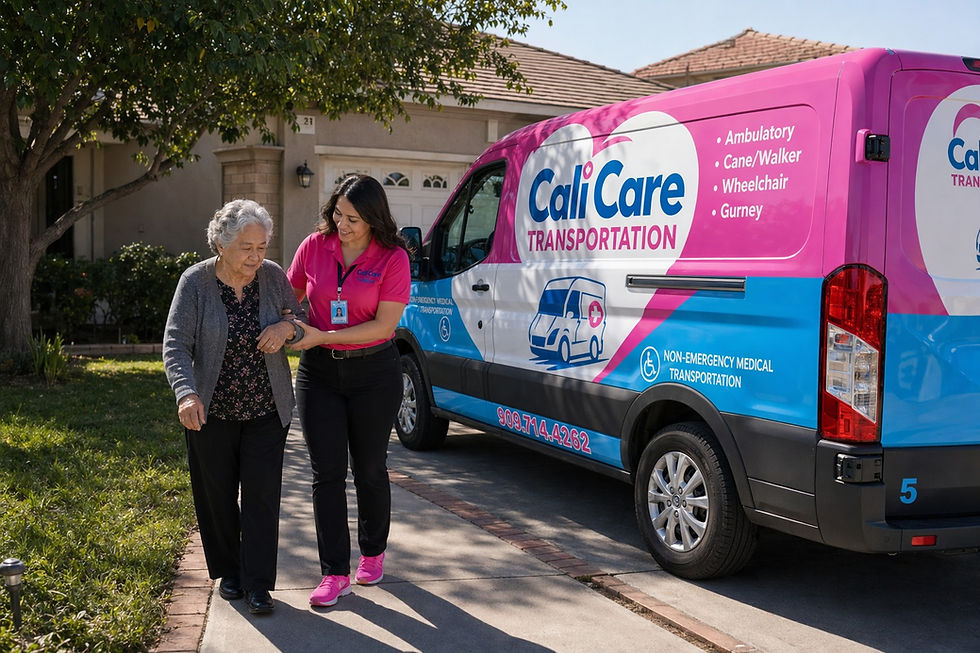
Ambulatory transportation is for riders who can walk, but still need a dependable medical ride with more care than a standard rideshare or casual pickup.
This may fit someone who:
walks independently but tires easily;
uses a cane or walker;
needs help getting from the front door to the vehicle;
should not drive after an appointment or procedure;
needs a calmer, more coordinated ride for medical timing;
has a caregiver arranging transportation from another location.
Ambulatory does not mean the rider has no needs. It means the rider is not traveling in a wheelchair or reclined position for the ride. Families should still explain whether the rider needs a steady arm, extra time, help navigating a walkway, or support checking in at the destination.
For Redlands and San Bernardino families, ambulatory transportation can be a practical fit for routine medical appointments, follow-up visits, therapy, outpatient care, and other planned non-emergency trips when the rider can walk but benefits from a more structured ride.
If you are comparing ambulatory transportation in Redlands with a wheelchair-accessible ride, explain whether the rider can walk the whole way, walk only short distances, or needs help from the door to the vehicle. That one detail can change the recommended ride type.
When Wheelchair Transportation Is The Better Fit
Wheelchair transportation is usually the right direction when the rider uses a wheelchair for mobility or needs support to transfer into a regular vehicle seat.
Before booking, be ready to describe the wheelchair:
manual wheelchair;
power wheelchair;
transport chair;
bariatric or wider chair;
whether the rider can transfer;
whether the chair needs securement during the ride.
These details matter because not every wheelchair situation is the same. A rider in a compact manual chair may need a different setup than someone in a larger power chair. A rider who can transfer may have different needs than someone who must remain seated in the chair throughout the trip.
Wheelchair-accessible transportation can support appointment rides, dialysis-related transportation, therapy visits, post-discharge follow-ups, specialist visits, and recurring medical schedules. The goal is to make the ride feel organized and respectful, without asking the family to improvise mobility support at the last minute.
Families searching for wheelchair transportation in San Bernardino or wheelchair transportation in Redlands should be ready to describe the chair and the transfer need before booking. A power chair, manual chair, transport chair, and bariatric chair can each require different planning.
When To Ask About Gurney Or Stretcher-Style Transportation for NEMT Rides in Redlands and San Bernardino
Some riders should not travel seated in a standard vehicle seat or wheelchair. In those situations, families may need to ask whether gurney or stretcher-style non-emergency transportation is the right fit and whether it is available for the specific ride.
If you are searching for stretcher transportation in Redlands, gurney transportation in San Bernardino, or higher-support NEMT in the Inland Empire, start by sharing what the care team said about positioning and whether the rider can safely sit upright.
This can come up when a rider needs to remain reclined, has discharge instructions that affect positioning, or needs support to tolerate seated transportation. The transportation provider should not be guessing from a short phrase like "needs help." The family or care coordinator should explain what the facility or care team has communicated about mobility and positioning.
Keep the conversation practical:
Does the rider need to remain lying down or reclined?
Is the ride connected to a discharge or transfer?
Has the care team given positioning instructions?
Is there equipment at pickup or drop-off that affects the transfer?
Are there stairs, tight walkways, elevators, or access concerns?
This article is not medical advice, and the transportation team does not replace clinical guidance. The point is to give the provider enough information to determine whether the requested ride type fits the trip and whether additional coordination is needed.
Redlands And San Bernardino Pickup Details Families Should Confirm
Local context matters. A ride in Redlands may involve a home pickup, outpatient clinic, senior community, or a route toward Loma Linda. A San Bernardino ride may involve a different traffic pattern, pickup entrance, or family coordination need.
Before booking, gather:
pickup address and destination;
appointment time or discharge window;
rider's mobility equipment;
whether a caregiver will ride or meet the rider;
any gate codes, parking instructions, or building access details;
whether the pickup is from a home, facility, clinic, or hospital entrance;
the best phone number for day-of coordination.
If you are unsure which ride type fits, say that directly. A clear description is more useful than trying to pick the perfect label. For example: "My mom can walk short distances with a walker, but she needs help from the front door to the vehicle," gives the dispatcher more useful information than simply saying "senior transport."
Common Mistakes That Make Booking Harder
The most common mistake is under-describing the rider's needs. Families may say "they just need a ride" because they do not want to overcomplicate things. But medical transportation is smoother when the provider understands the real support needed.
Avoid these booking gaps:
not mentioning a wheelchair until pickup;
not saying whether the rider can transfer;
assuming a walker user and wheelchair user need the same setup;
waiting until the discharge window is already active to ask about higher-support transport;
forgetting to mention stairs, ramps, elevators, or narrow walkways;
using emergency language for a non-emergency trip.
If the situation is urgent, unsafe, or medically unstable, call emergency services. Non-emergency medical transportation is for planned, scheduled rides where the rider needs transportation support but does not need emergency medical response.
What To Say When You Call Or Text Cali Care
When you call or text (909) 714-4262, have the basics ready:
"I am booking a non-emergency medical ride in Redlands/San Bernardino. The rider uses a walker/wheelchair/needs to stay reclined. The pickup is at [general location type], the destination is [general location type], and the appointment or pickup time is [time]. Can you help us confirm the right ride type?"
You do not need to know every transportation term before calling. You do need to be honest about the rider's current mobility, equipment, and support needs. That is what helps the team match the ride to the day.
For families, the right ride type can turn a more demanding appointment day into something more manageable. For care coordinators, it can reduce friction around discharge, recurring visits, and follow-up care. For the rider, it means the transportation plan respects what they actually need.
FAQ
How do I know if my loved one needs ambulatory or wheelchair transportation?
Choose ambulatory transportation when the rider can walk with limited support. Choose wheelchair transportation when the rider uses a wheelchair for mobility, needs securement, or needs support to transfer into a regular seat.
When should I ask about gurney or stretcher-style transportation?
Ask about gurney or stretcher-style transportation when the rider may need to remain reclined or lying down, especially for discharge or higher-support non-emergency rides. Share any positioning guidance from the care team.
Can a family caregiver book the ride?
Yes. Family members often help arrange non-emergency medical transportation. Be ready with the pickup, destination, appointment time, mobility needs, and the best phone number for coordination.
Is non-emergency medical transportation the same as an ambulance?
No. Non-emergency medical transportation is for planned rides to appointments, discharges, recurring care, and other scheduled medical transportation needs. If the rider has an emergency or unstable medical condition, call 911.
What should I have ready before calling Cali Care?
Have the pickup and destination, appointment or pickup time, mobility equipment, transfer needs, access details, and caregiver coordination details ready. Call or text (909) 714-4262 to discuss the ride.
You can also review our non-emergency medical transportation services and contact page before you call.


Comments